Essential Steps to Take When Your Car Makes Unusual Noises in Philadelphia: Diagnose, Respond, and Repair
Hearing an unfamiliar noise from your car while driving around Philadelphia can be unsettling and, in some cases, dangerous. This guide explains what qualifies as an unusual car noise, why prompt diagnosis matters for safety and to prevent more costly repairs, and how to prioritize actions when you hear knocking, squealing, grinding, clunking, or humming. You will learn clear, street-tested steps for safely pulling over on busy Philadelphia roads, quick checks that help identify where a sound is coming from, and how technicians interpret those clues during diagnostics and repair. The article maps practical immediate actions, common noise types and causes, the diagnostic workflow used by professional mechanics, routine maintenance that prevents noises, and concise answers to frequently asked questions. Throughout, keywords like car noise identification Philadelphia, diagnose car sounds Philadelphia, and auto diagnostic services Philadelphia are used to help you find the right next steps and local support if you need professional help.
What Immediate Actions Should You Take When Your Car Makes Strange Noises in Philadelphia?

When your car starts making a strange noise in Philadelphia, prioritize safety first by identifying whether the sound signals imminent danger or a defect you can troubleshoot later. Unusual noises that come with smoke, loss of power, burning smells, or severe vibration indicate urgent mechanical failure and require stopping as soon as it is safe; conversely, intermittent squeaks or minor rattles may allow you to drive slowly to a nearby safe location. The goal of immediate actions is to narrow down the noise source (engine bay, undercarriage, wheel area) while minimizing risk to you and other road users. These steps also produce clear observations that will speed up diagnostics once a mechanic inspects the vehicle.
Before calling for professional help, follow these immediate, safety-first steps:
- Pull over safely to the right shoulder or a well-lit side street and switch on hazard lights so other drivers can see you.
- Turn off the engine if you detect smoke, burning smells, loss of oil pressure, or extreme vibration to prevent further damage.
- Note when the noise occurs (idle, acceleration, braking, turning) and where it seems to come from (front, rear, left, right, underbody).
These three steps help you control immediate risk and gather the most useful information for later repair, and they prepare you to describe the problem accurately to a technician.
If you are on a highway or cannot safely stop immediately, reduce speed gradually, signal lane changes, and use an exit or designated breakdown area to get off the roadway. Philadelphia streets and bridges can be crowded; selecting a safe spot to stop is as important as diagnosing the noise itself. Once stopped, a short list of observations—sound timing, associated dashboard warnings, and any visible leaks or smoke—will make a test drive and inspection by a professional far more efficient.
How Can You Safely Identify and Respond to Unusual Car Noises on Philadelphia Roads?
Safely narrowing down where a noise originates begins with situational observation and a calm, methodical approach on busy city streets. First, determine whether the sound changes with engine speed, wheel speed, braking, or steering input; this helps separate engine, drivetrain, brake, and suspension sources. Second, conduct a quick exterior inspection only if conditions allow: look for loose exhaust hangers, debris in wheel wells, or fluid pools under the car while keeping a safe distance from traffic. Third, note environmental context—cold starts in winter, potholes common in Philadelphia, or heavy traffic—since these conditions often influence whether a noise is urgent or manageable.
Record a few short notes or voice memos describing the noise (metallic knock, high-pitched squeal, steady hum) and the driving conditions when it appears; this information is the single most valuable thing you can provide to a mechanic. Keeping these observations concise and structured improves the likelihood of an accurate remote diagnosis and speeds up in-shop testing. Practical, calm steps on the road reduce risk and get you closer to a safe, professional repair.
When Is It Critical to Stop Driving and Call a Philadelphia Mechanic?
Certain red flags require you to stop driving immediately and seek professional assistance from a local mechanic rather than attempting to reach your destination. If you see smoke, smell burning, experience sudden loss of braking performance, severe steering pull, engine misfires with power loss, or a grinding metal-on-metal sound, these signs indicate possible catastrophic component failure that could endanger you and others. Continuing to drive under these conditions risks engine seizure, brake failure, or a tire blowout, and may compound repair costs significantly.
When any red flag appears, move the vehicle to a safe location, shut off the engine, and contact roadside assistance or a reputable local shop by phone. Provide the technician with the concise observations you recorded—when the noise occurs, whether it is constant or intermittent, and any visual or gauge warnings—to help them prioritize a safe tow or same-day diagnostic appointment. Remaining parked until professionals evaluate the issue is often the safest choice for severe symptoms.
After this section, if you need same-day diagnostics or a trusted Philadelphia shop to evaluate urgent car noises, consider contacting 8 Cylinders Auto Repair by phone at +1 (267) 287-2000 or bringing your vehicle to their location at 1901 W Courtland St, Philadelphia, PA 19140 for a diagnostic inspection. The shop offers engine repair, brake services, diagnostics, and general maintenance, and they emphasize fast turnaround and honest, upfront pricing. Calling ahead with your recorded observations will help the team prioritize your visit and advise whether stopping on-site or towing is the safer option.
What Are the Most Common Types of Unusual Car Noises and Their Causes?
Recognizing common noise categories—engine knocking, brake squeal or grinding, suspension clunks, exhaust rattles, transmission whining, wheel bearing hums, and belt squeals—lets drivers triage urgency and match symptoms to probable component issues. Each noise type typically follows a pattern tied to a specific subsystem: engine knocks often relate to ignition or oil pressure issues, brake squeal signals worn pads or glazing, and suspension clunks indicate loose or worn joints. Understanding these patterns helps you decide whether it is safe to drive slowly to a shop or stop immediately for a tow. Below is a concise list of the most frequent noise types to listen for and the driving conditions where they commonly appear.
Common noise categories to listen for while driving:
- Engine knocking or pinging during acceleration or under load.
- Squealing or grinding when applying brakes or coasting.
- Clunking or popping over bumps or during turns.
- Rattling or hissing from the exhaust or underbody.
These categories map to different urgency levels; engine knocks with loss of power or grinding brakes typically demand immediate attention, while light belt squeal on cold start may be scheduled for a routine inspection. Recording when and how these sounds occur creates a clear symptom timeline that technicians use in diagnosis.
This quick-reference table helps you match what you hear to likely causes and urgency, enabling faster decisions about safe driving and whether to call for professional help.
What Does Engine Knocking or Pinging Sound Like and What Causes It?
Engine knocking or pinging is a sharp, metallic knock that often varies with engine load and RPM, and it usually occurs during acceleration or when climbing hills. Mechanically, knocking indicates abnormal combustion events—pre-ignition or detonation—caused by factors like incorrect ignition timing, low-octane fuel, carbon buildup, or low oil pressure that affects bearings and lubrication. These conditions reduce engine efficiency and, if ignored, can lead to piston damage or bearing failure, making early inspection critical. When knock is accompanied by dashboard warnings, reduced power, or oil pressure fluctuation, stop driving and seek diagnostic testing promptly.
Noting whether the sound is rhythmic or irregular and whether it changes with engine speed helps technicians narrow their tests to cylinders, fuel quality, or lubrication systems. Sharing these observations before your appointment speeds up the diagnostic process and reduces unnecessary parts replacement.
How Can You Recognize Squealing or Grinding Brake Noises and Their Repair Needs?
Brake-related noises fall into two common patterns: high-pitched squeal typically signals pad wear indicators or glazing, while deep grinding usually means the brake pad material has worn away and metal is contacting the rotor. Squeal often appears on light braking or cold stops and can sometimes be remedied by pad replacement or resurfacing rotors; grinding is urgent and indicates immediate risk to braking performance. Drivers should test brakes gently in a safe area: persistent grinding, vibration, or pulling to one side requires stopping driving and calling for inspection or tow.
When describing brake noise to a mechanic, include whether it occurs under light or hard braking, whether you feel pedal vibration, and whether braking effectiveness has decreased. This detail directs the shop to examine pads, rotors, calipers, and related hydraulic components during diagnostics.
How Does 8 Cylinders Auto Repair Diagnose and Fix Unusual Car Noises in Philadelphia?
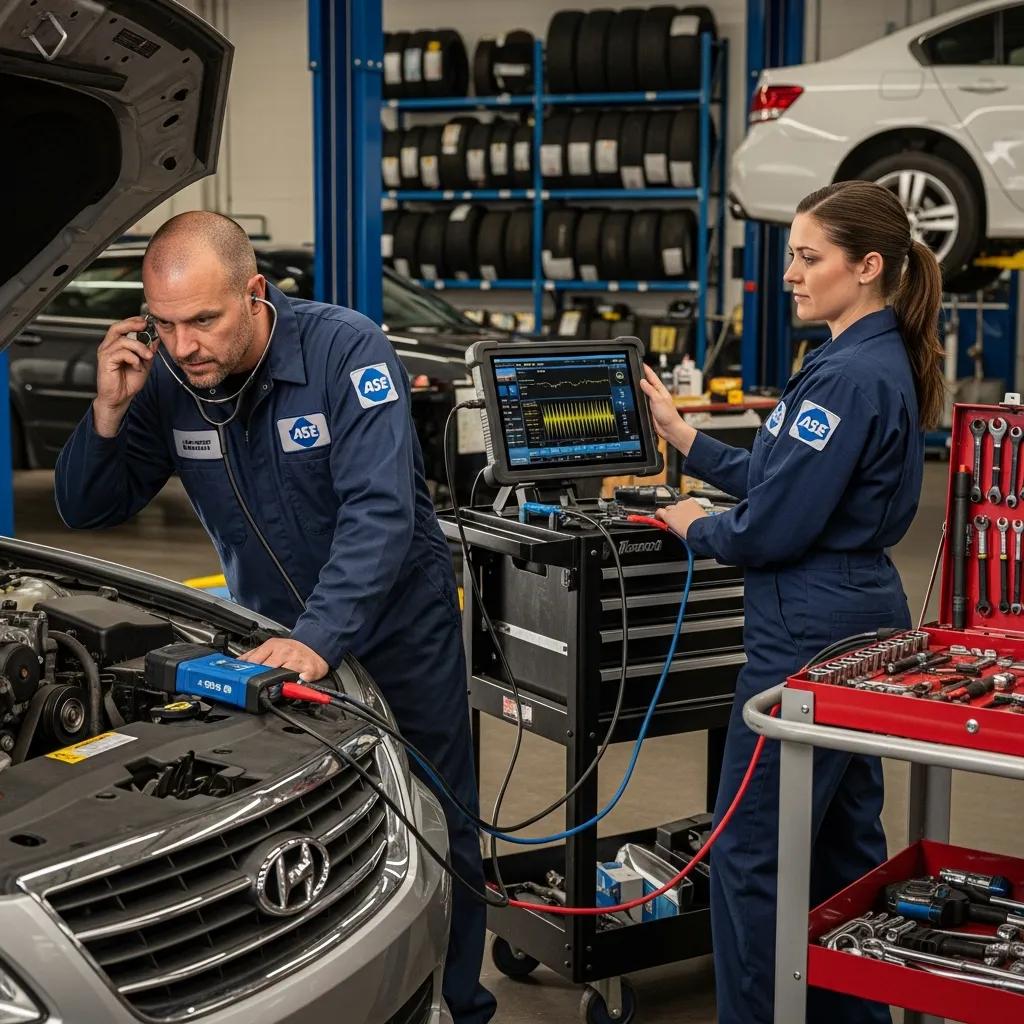
8 Cylinders Auto Repair applies a stepwise diagnostic workflow to identify unusual car noises: technicians begin with a visual inspection, proceed to a controlled test drive to reproduce the sound, use diagnostic scan tools to read engine and transmission codes, and employ targeted mechanical tests such as wheel spin checks or component isolation. ASE-certified technicians at the shop pair modern diagnostic equipment with real-world test procedures to map symptoms to root causes efficiently. The outcome of this process is a clear repair plan that ties a detected fault to the appropriate service—engine repair, brake service, exhaust work, or suspension and steering repairs—delivered with transparent estimates and timelines.
- Visual and safety inspection to identify leaks, loose parts, and obvious failures.
- Test drive and controlled reproduction of the noise to determine conditions that trigger it.
- Electronic diagnostics with OBD-II scanners and component testing for accurate fault identification.
This methodical approach reduces misdiagnosis and unnecessary replacements, and it facilitates honest, upfront pricing while enabling faster turnaround for repairs that restore safe operation.
Below is a table showing diagnostic tools and the outcomes technicians achieve, which clarifies how each tool supports accurate repair recommendations.
What Advanced Diagnostic Tools Do ASE-Certified Technicians Use for Noise Identification?
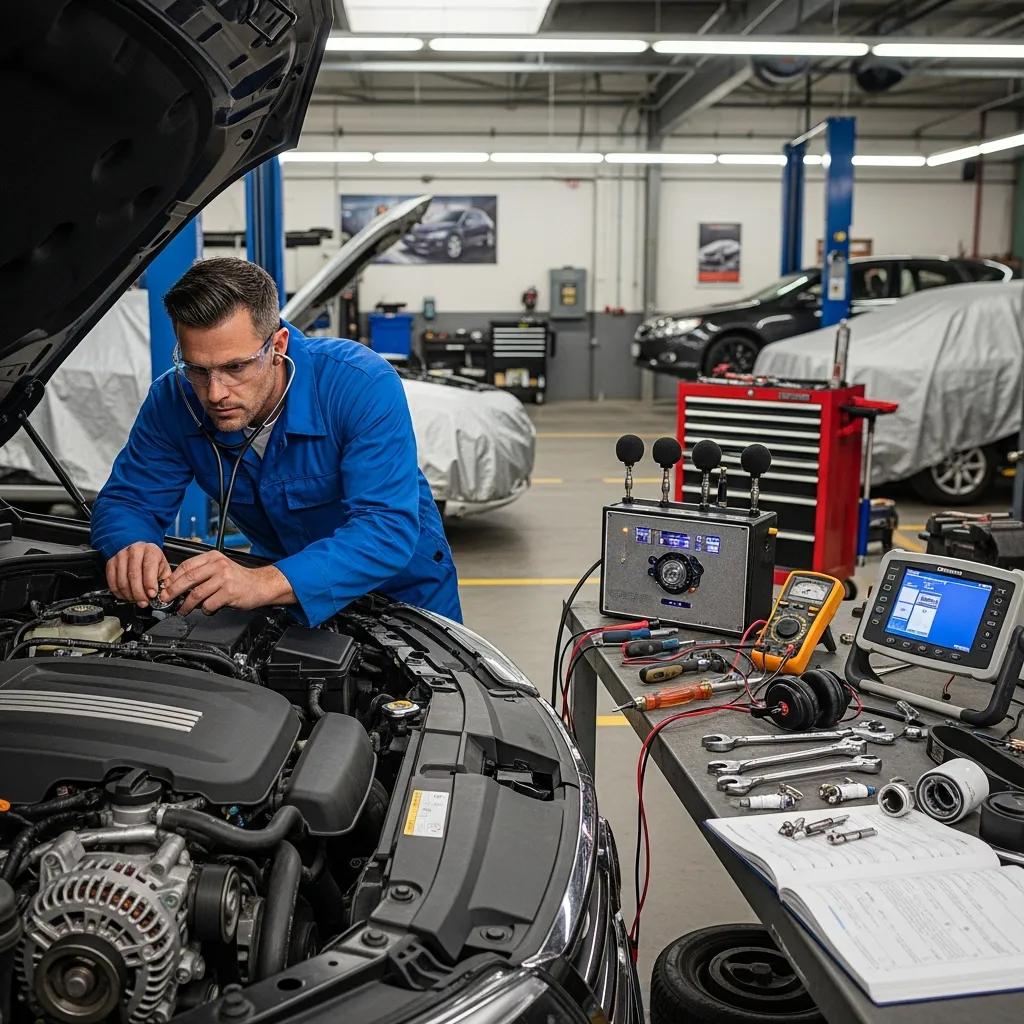
ASE-certified technicians use a combination of electronic and mechanical diagnostic tools to pinpoint noise sources reliably, such as OBD-II scanners for fault codes, chassis ears for audio isolation, compression testers for engine health, and mechanical gauges for oil pressure and brake measurements. Each tool provides a distinct data point—scanners reveal electronic faults, chassis ears let a technician “listen” at specific locations while driving, and pressure tests confirm lubrication or hydraulic integrity—creating a network of evidence that defines the repair scope. Combining these measurements prevents misdiagnosis that can lead to unnecessary part replacements and longer downtime.
Technicians correlate tool data with the driver’s observations (when the noise occurs, what it sounds like) to form diagnostic triples—engine component → exhibits → knock under load—which speeds resolution and improves repair accuracy. This evidence-based workflow keeps repairs targeted and cost-effective.
Which Repair Services Address Common Noise Issues Like Engine, Brakes, and Exhaust?
Once diagnostics identify the root cause of a noise, common repair services map directly to the affected subsystem: engine noises often lead to engine diagnostics and repair or lubrication services; brake noises require pad, rotor, or caliper replacement; exhaust rattles involve hanger repair, muffler replacement, or catalytic converter attention. The shop’s service offerings—engine repair, brake services, exhaust system repairs, suspension and steering work, transmission services, and electrical diagnostics—cover the typical pathways from symptom to fix. Each repair is documented with the detected cause, recommended parts, and an estimated time to return the vehicle to safe operation.
Customers can expect technicians to explain the diagnostic findings, show the affected components when appropriate, and provide transparent pricing and turnaround details. This clarity helps drivers decide on repairs and understand how each service eliminates the specific noise and restores normal operation.
How Can You Prevent Unusual Car Noises Through Regular Maintenance in Philadelphia?
Routine maintenance reduces the likelihood of many unusual noises by keeping components within specification and catching wear before it becomes audible failure. Preventive tasks include scheduled oil and filter changes to protect engine bearings, periodic brake inspections and pad replacement to avoid metal-on-metal contact, serpentine belt checks and tensioner replacements to prevent squeal, and suspension inspections to detect worn bushings or ball joints before they clunk. Regular maintenance is especially important in Philadelphia where winter temperatures, road salt, and potholes accelerate wear on undercarriage components and brake systems.
The checklist below outlines key maintenance tasks recommended for noise prevention, with an emphasis on practical intervals and benefits:
- Change engine oil and filter at manufacturer-recommended intervals to preserve lubrication and prevent knocking.
- Inspect brake pads, rotors, and calipers every 10,000–15,000 miles or at each tire rotation to avoid squeal and grinding.
- Check serpentine belt and tensioner annually or at the first sign of cracking to prevent belt squeal and accessory failure.
Adhering to this schedule prevents minor noise sources from developing into serious mechanical failures and extends the life of major components, saving time and money in the long run.
What Maintenance Practices Help Avoid Engine and Belt Noises?
Consistent oil changes, monitoring oil pressure, and using the proper fuel octane reduce engine knock and protect internal components; these practices maintain correct lubrication and combustion conditions. For belt noises, inspect the serpentine belt for cracks, glazing, or fraying and verify tensioner operation; replacing worn belts and faulty tensioners eliminates most cold-start or under-load squeals. Performing these checks as part of scheduled maintenance or before long trips helps avoid sudden failures and noisy symptoms that can become costly if neglected.
Proactive checks and timely parts replacement create a diagnostic history that mechanics use to predict component life, enabling preventive interventions that save money and reduce unexpected roadside failures.
How Does Timely Brake and Suspension Maintenance Reduce Noise Risks?
Regular brake inspections catch pad wear and rotor damage early, preventing the metal-on-metal contact that causes grinding and accelerates rotor scoring. Suspension maintenance—replacing worn bushings, ball joints, and shocks—prevents clunking, uneven tire wear, and handling issues that can produce audible and safety-related symptoms. Keeping these systems maintained preserves ride quality and braking performance, which is particularly important on Philadelphia roads with frequent potholes and urban driving stresses.
Routine inspection intervals and immediate attention to early warning signs reduce long-term repair costs and minimize time sidelined for major repairs.
What Are the Most Frequently Asked Questions About Car Noises and Repairs in Philadelphia?
Drivers commonly ask what a weird noise means, whether it’s safe to drive, and how quickly they should seek repairs; concise, authoritative answers help make safe choices before visiting a shop. Noises are diagnostic clues: their sound, timing, and associated symptoms form a clear pattern technicians use to identify worn or failing components. Short, practical answers below are optimized to help Philadelphia drivers quickly decide whether to continue driving or to seek immediate professional help.
- What does it mean when your car makes a weird noise? A noise usually identifies a subsystem under stress—engine, brakes, suspension, exhaust, or drivetrain—and the sound pattern plus driving condition points a mechanic toward the likely cause.
- Can you drive your car safely if it’s making strange noises? Yes, but only when the noise is minor and not accompanied by smoke, loss of power, burning smells, or compromised brakes; otherwise, stop and seek a professional inspection.
- How quickly should I get a noisy car checked? Prioritize immediate inspection for grinding, knocking with power loss, or brake failure; schedule diagnostics within days for persistent squeals, hums, or intermittent clunks.
What Does It Mean When Your Car Makes a Weird Noise?
A weird noise is a symptom that points to a specific component group—engine, brakes, suspension, exhaust, or drivetrain—and its pattern (timing, pitch, frequency) helps determine the likely root cause. For example, a rhythmic metallic knock on acceleration often implicates engine internals or rod bearings, whereas a squeal during braking suggests pad wear or glazing. Understanding this mapping reduces guesswork and prevents unnecessary part replacement during repair. If the noise appears with other warning signs like smoke or loss of power, treat the situation as urgent and stop driving immediately.
Documenting the sound and when it occurs before visiting a mechanic makes the diagnostic process far more efficient and accurate.
Can You Drive Your Car Safely If It’s Making Strange Noises?
Short answer: sometimes, but only under strict caveats—if the noise is minor, does not affect vehicle control, and is not accompanied by smoke, loss of brakes, or severe vibration, you can often drive slowly to a safe repair facility. For all other scenarios—grinding brakes, engine knocking with power loss, or sudden steering issues—stop driving and call for towing or roadside assistance. Minimizing driving under risky symptoms reduces the chance of causing further mechanical damage or creating a hazardous situation on Philadelphia streets.
When you do drive cautiously to a shop, keep speeds low, avoid heavy braking or steep hills, and provide technicians with detailed observations to streamline diagnostics.
Why Choose 8 Cylinders Auto Repair for Diagnosing and Repairing Unusual Car Noises in Philadelphia?
8 Cylinders Auto Repair positions itself as a full-service automotive repair shop that combines ASE-certified technicians with modern, fully equipped service bays to diagnose and repair noise-related issues across engine, brake, exhaust, transmission, and suspension systems. The shop emphasizes honest, upfront pricing, fast turnaround times, and a customer satisfaction guarantee, and it services all makes and models with electrical diagnostics, radiator and cooling maintenance, and emissions testing among its capabilities. These trust signals support confident decision-making when facing unusual car noises in Philadelphia and seeking a local shop that can both diagnose and complete necessary repairs efficiently.
Key reasons drivers choose this shop include:
- ASE-certified technicians who follow systematic diagnostics and testing.
- Modern diagnostic tools and fully equipped service bays for accurate repairs.
- Honest pricing and fast turnaround to get vehicles back on the road safely.
What Makes 8 Cylinders Auto Repair Philadelphia’s Trusted Mechanic for Noise Diagnosis?
The shop’s combination of ASE-certified staff, modern diagnostic equipment, and a broad repair menu—engine repair, brake services, transmission work, suspension and steering, and exhaust system repairs—creates a practical advantage for diagnosing complex noise problems. ASE certification indicates technician competency across key systems, while well-equipped service bays enable experienced staff to reproduce and test noises under controlled conditions. Their commitment to honest pricing and customer satisfaction helps local drivers make informed choices without pressure, and the shop’s capability to handle all makes and models means fewer transfers and faster resolution for diverse vehicles.
Sharing your recorded observations and the driving context when scheduling helps the team prepare the right diagnostic tools and prioritize the inspection efficiently.
How Can You Schedule a Service Appointment for Car Noise Diagnosis in Philadelphia?
To schedule a diagnostic inspection, call 8 Cylinders Auto Repair at +1 (267) 287-2000 and provide the vehicle make, model, a brief description of the noise, and when it occurs; staff will advise whether to bring the vehicle in immediately or arrange towing if the issue appears dangerous. When you arrive at 1901 W Courtland St, Philadelphia, PA 19140, expect an initial safety inspection and a test drive to reproduce the sound, followed by targeted electronic and mechanical tests to identify the root cause. Having your observation notes ready and any dashboard warnings listed expedites the process and leads to a clearer, faster repair plan.
As with earlier safety guidance, prioritize stopping in a safe location and calling the shop if you experience severe symptoms like smoke, loss of power, or brake failure; the team can advise whether immediate towing is recommended.
This article has walked through how to react to unusual car noises in Philadelphia, how to map sounds to likely causes, the diagnostic workflow used by professional ASE-certified technicians, preventive maintenance practices, and practical next steps for scheduling inspection and repair with a local full-service shop. Use the checklists, lists, and tables provided here to capture precise observations that make diagnostics faster and repairs more accurate when you consult a qualified mechanic.