How to Save Money on DIY Car Repairs in Philadelphia: Affordable Tips and Trusted Advice
Car repair costs in Philadelphia can strain a household budget when unexpected failures occur, but practical DIY skills and smart choices reduce expenses without compromising safety. This guide teaches Philadelphia drivers how to save money on DIY car repairs in Philadelphia by focusing on routine maintenance, safe do-it-yourself tasks, and clear criteria for when professional help is a better financial decision. You will learn step-by-step low-risk repairs, a tailored maintenance schedule for local driving conditions, and checks that prevent expensive failures down the line. The article also explains how to compare mobile mechanics and full-service shops, and how warranties, honest pricing, and certified technicians factor into long-term savings. Each section includes concise checklists, comparison tables, and local resource tips so you can act immediately and avoid common cost traps. Read on to build a cost-effective, safety-first plan that stretches maintenance dollars and preserves vehicle reliability across Philadelphia’s seasons.
What Are the Best DIY Car Maintenance Tips to Save Money in Philadelphia?
DIY car maintenance focuses on simple, repeatable tasks that prevent bigger repairs by reducing wear and catching issues early. Performing basic maintenance—checking oil and fluids, monitoring tire condition, replacing wiper blades, and swapping air filters—directly reduces the pace of component failure and improves fuel efficiency, which lowers operating costs. These tasks require minimal tools and parts, and they return value through avoided repairs and longer service life for items like brakes and batteries. Below are practical, prioritized steps Philadelphia drivers can implement regularly to start saving immediately and reduce shop visits.
Which Simple Car Care Tasks Can You Do at Home to Cut Costs?
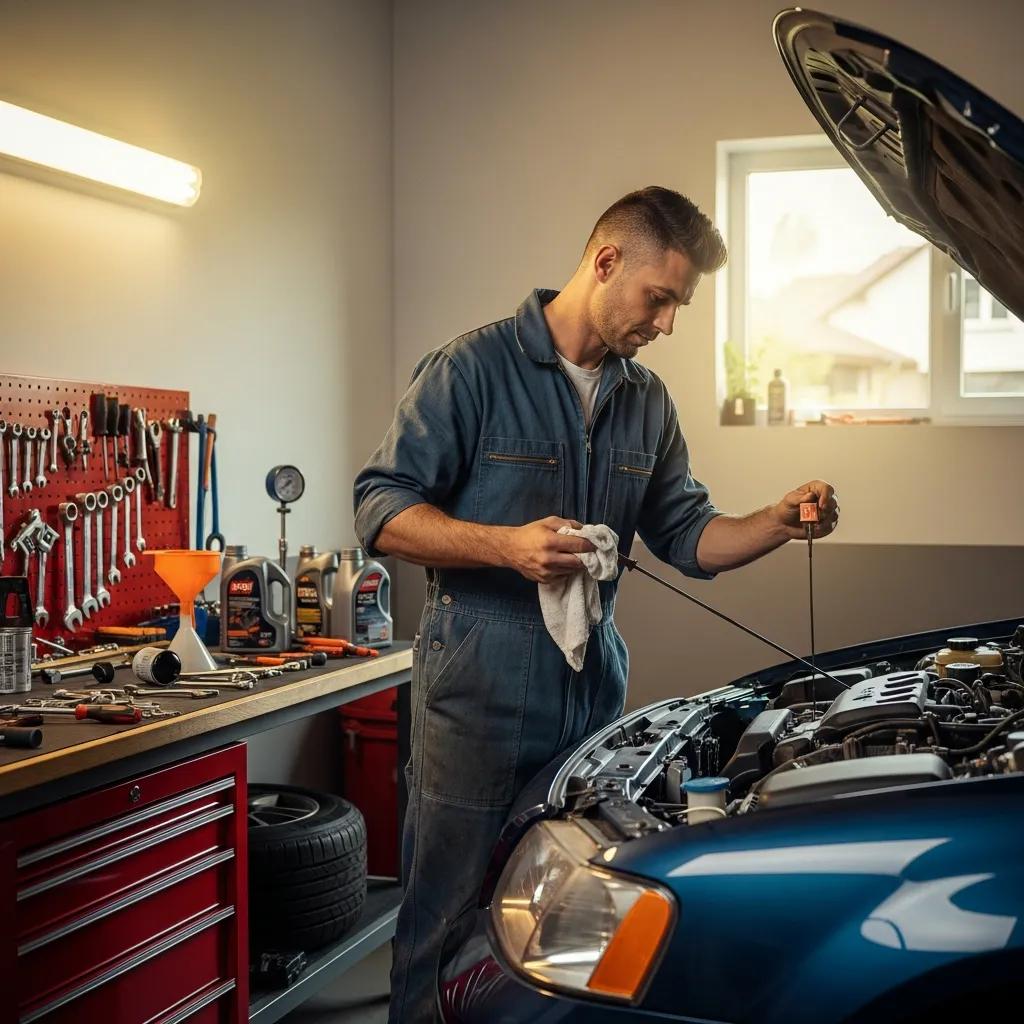
Many simple car care tasks are low-risk and offer meaningful savings when done correctly. Start with oil level checks and top-offs, which take ten minutes and prevent engine wear; change engine air filters every 12,000–15,000 miles or as recommended by your vehicle manufacturer to maintain fuel economy; replace worn wiper blades seasonally to preserve visibility and safety; check and maintain proper tire pressure monthly to extend tread life and improve MPG. Battery maintenance—cleaning terminals and testing voltage—can avoid roadside failures and extend battery life by months. Each task typically requires basic tools like a socket set, tire gauge, funnel, and work gloves, keeping one-time tool investment small relative to long-term savings.
- Tools needed for basic DIY tasks include a tire pressure gauge, jack and stands, funnel, and hand tools.
- Routine checks usually take 10–60 minutes and often cost under $50 in parts.
- Performing these tasks reduces the frequency of shop visits and prevents secondary damage.
These routine actions prevent small issues from escalating into expensive repairs and naturally lead into a simple maintenance schedule you can follow for Philadelphia driving conditions.
How to Create a DIY Car Maintenance Schedule for Philadelphia Drivers?
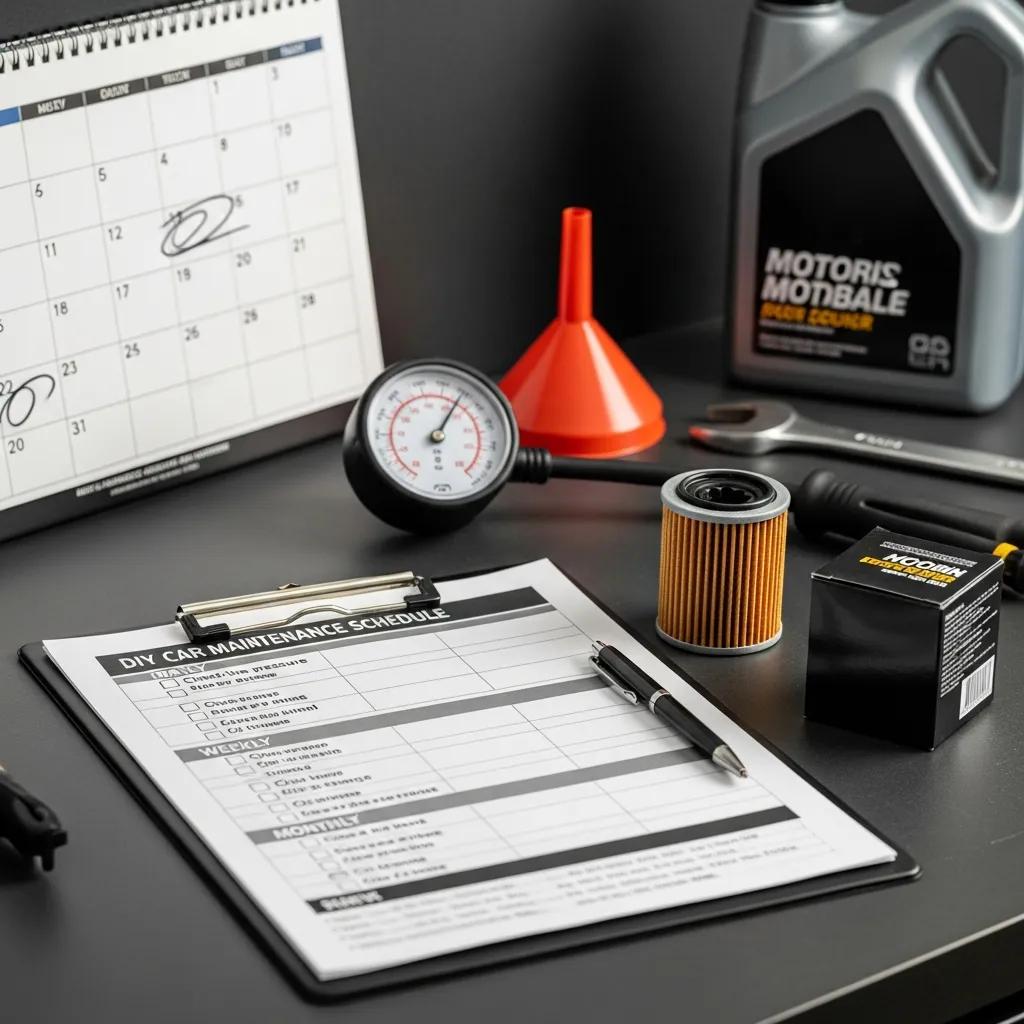
A localized maintenance schedule helps drivers align DIY tasks with seasonal risks such as road salt, urban stop-and-go traffic, and temperature swings that affect fluids and tires. Monthly checks should include tire pressure and lights; every 3 months or 3,000–5,000 miles check oil and filters, brake pad wear, and fluid levels; every 12 months or per manufacturer intervals inspect belts, hoses, and coolant system before winter. Keep a simple log with dates, mileage, and actions taken to track patterns and support resale value. A predictable cadence not only spreads costs over time but also improves the odds of catching gradual failures early, reducing expensive emergency repairs and downtime.
- Monthly: tire pressure, lights, windshield washer fluid.
- Quarterly: oil level, air filter, battery terminals, brake pad inspection.
- Annually: coolant, belts, hoses, and alignment check before winter.
Following this schedule harmonizes DIY savings with timely professional inspections when complexity or specialized tools are needed.
When Should You Choose Affordable Professional Auto Repair Services in Philadelphia?
Professional service is the cost-effective choice when repairs involve safety-critical systems, specialized diagnostics, or when DIY attempts risk compounding damage. Complex engine problems, transmission issues, advanced electrical faults, and cooling system failures usually require diagnostic equipment and experienced technicians to resolve efficiently. Choosing a reputable, affordable shop with transparent estimates and warranty-backed work can prevent repeated repairs and unexpected bills, which ultimately saves money. The next subsection explains how to verify trustworthiness and evaluate pricing and warranties so you can make informed decisions about outsourcing repairs.
How to Find Trustworthy and Affordable Mechanics with ASE-Certified Technicians?
Trustworthy mechanics combine clear communication, certifications, and written estimates to create predictable repair outcomes. Ask shops whether technicians are ASE-certified, request itemized written estimates, compare two quotes for the same repair, and look for warranty terms on parts and labor as indicators of responsible service. Read recent reviews with an eye for consistent remarks about honest pricing and turnaround times rather than isolated praise. Verification steps reduce the risk of overpaying and avoid shops that pressure unnecessary services. These vetting actions lead directly into understanding the value warranties provide for long-term savings.
What Are the Benefits of Honest Pricing and Warranties for Long-Term Savings?
Honest pricing and warranties lower lifetime vehicle ownership costs by reducing the risk of repeat failures and surprise expenses. A clear, itemized estimate helps you plan and compare total repair costs, while a parts-and-labor warranty protects you from early failures without paying twice. For example, correct diagnosis and warranty-backed repairs mean an initial higher invoice can be cheaper than multiple amateur attempts that repeatedly fail. When shops commit to transparent estimates and honor warranties, they shift financial risk away from the owner, delivering long-term savings and peace of mind that complements a DIY maintenance approach.
- Honest estimates make comparing shop bids straightforward and reduce scope creep.
- Warranties cover early failures and can eliminate repeat repair costs.
- Documentation from shops strengthens warranty claims and resale disclosures.
After you know how to vet shops, the next section helps decide which repairs are safe to perform at home and which should go to professionals.
How to Decide Between DIY Repairs and Professional Help in Philadelphia?
Deciding between DIY and professional repairs requires balancing DIY difficulty, safety risk, and the cost of tools or potential mistakes. Low-risk tasks that save money are ideal for home work, while diagnostics-intensive, safety-critical, or labor-intensive jobs are often better handled by professionals. Create a simple decision checklist based on task complexity, required tools, and safety implications to guide choices. The following mini-guides and a comparison table make that tradeoff explicit so you can choose actions that minimize total cost and risk.
What Are the Most Cost-Effective DIY Repairs You Can Safely Perform?
Certain repairs reliably save money and pose low risk when performed correctly: replacing wiper blades, changing the air filter, swapping bulbs, rotating tires with proper jack support, and checking battery health. Each of these tasks uses inexpensive parts and common tools and typically takes 10–60 minutes, which keeps labor costs effectively zero compared with shop rates. Follow manufacturer guidance and safety precautions—support the vehicle securely when under it and dispose of fluids properly—to avoid escalation. These DIY wins free budget for periodic professional inspections that catch hidden issues.
- Wiper blade replacement: 10–20 minutes; improves safety and prevents interior water damage.
- Air filter swap: 15–30 minutes; maintains MPG and engine performance.
- Bulb replacement: 10–30 minutes; prevents traffic stops and inspection failures.
These low-risk tasks form the backbone of an effective DIY savings plan and lead into tasks where professional help is preferable.
This table clarifies where DIY yields savings and where professional capability prevents costly mistakes. Understanding these boundaries helps decide when to invest in tools or call a shop.
When Is It Safer and More Affordable to Call a Professional Mechanic?
Calling a professional is the safer, more affordable choice when the repair requires specialized diagnostic tools, involves safety-critical systems (brakes, steering, transmission), or when time and the learning curve make DIY uneconomical. Misdiagnosis or improper repair can multiply costs by causing collateral damage—pulling the wrong component or failing to test post-repair can lead to expensive follow-ups. Prepare documentation of symptoms, recent maintenance, and photos to accelerate accurate diagnosis at a shop. Bringing clear records reduces shop diagnostic time and can lower the final bill, making professional help cost-effective.
- Complex electrical faults and recurring engine codes usually require professional diagnostics.
- Transmission and major engine work almost always favor professional shops with proper tooling.
- Provide symptom documentation to the shop to speed diagnosis and limit labor charges.
The next section shows how preventative maintenance amplifies these savings across a vehicle’s lifetime.
How Can Preventative Car Care Save You Money on Repairs in Philadelphia?
Preventative maintenance reduces the probability of major repairs by addressing wear before failure, which translates into measurable long-term savings. Regular fluid changes, brake inspections, tire rotations, and coolant maintenance prevent accelerated wear that would otherwise require parts-and-labor replacements at higher cost. Mapping routine tasks to frequency and expected costs clarifies how small recurring investments avoid large, sudden expenses. The table below shows common maintenance tasks with estimated frequencies, costs, and the long-term benefits in avoided repairs.
Which Routine Checks and Maintenance Tasks Prevent Costly Breakdowns?
Routine checks are early warning systems that let you stop small problems from becoming big ones: monitor oil level and color monthly, check tire tread and pressure, test battery voltage, inspect belts and hoses for cracking, and verify coolant level before cold months. These checks identify leaks, overheating risks, and progressive wear that cause roadside failures and engine damage. Performing them regularly keeps systems in nominal condition and preserves fuel economy, which produces ongoing operational savings. Implementing these checks consistently creates compounding benefits by preventing emergency tow bills and accelerating repair detection.
The concept of optimizing maintenance to reduce costs while maintaining quality is a key aspect of economic efficiency in vehicle care.
Economic Strategies for Reducing Preventive Maintenance Costs
ABSTRACT: AbstractMaintenance represents a set of actions designed to preserve or restore a system to functional parameters.Based on the idea that maintenance is essential to production, being considered an expensive component of it, the personnel authorized for maintenance work focuses on studying and finding improved solutions and strategies for less expensive maintenance, so that they can perform maintenance works with a smaller budget compared to the previous budgets, but keeping the same quality of the services provided.These strategies are implemented in production and studied closely by the authorized persons, so that involuntary breakdowns of the machines do not occur.Once implemented, these strategies must take into account certain standards imposed by the authorized institutions in the field.
Analysis and economic strategies regarding the reduction of preventive maintenance costs, 2023
This table demonstrates how modest recurring costs translate into avoidance of high-cost repairs. Regular tracking of these tasks increases vehicle reliability and reduces lifetime maintenance spend.
How Does Regular Preventative Maintenance Extend Vehicle Life and Reduce Expenses?
Regular preventative maintenance reduces component wear, improves fuel efficiency, and preserves resale value, producing both direct and indirect financial benefits. By replacing consumables on schedule—filters, fluids, brake components—you minimize stress on major systems and delay expensive overhauls. For example, consistent oil changes and coolant care can add years to an engine’s usable life and avert costly internal failures. Keeping maintenance records documents value for buyers and can command higher resale prices, offsetting some ownership costs. These cumulative advantages make a maintenance-first strategy the most reliable path to lower overall vehicle expense.
- Early detection of wear avoids secondary failures and prolonged downtime.
- Improved fuel efficiency reduces recurring operating expenses.
- Documented maintenance enhances resale value and buyer confidence.
With routine care in hand, the next section helps you locate local resources and promotions to execute DIY plans affordably.
Where to Find Local Resources and Deals for DIY Car Repairs in Philadelphia?
Philadelphia drivers can save further by using local parts stores, tool rental services, and seasonal deals to lower DIY costs. National chains, independent parts suppliers, and online parts marketplaces provide price competition; tool rental services and community tool libraries offer specialty equipment without large purchases. Tracking end-of-season promotions, loyalty programs, and manufacturer rebates helps reduce parts costs for scheduled services. The guidance below lists types of resources to check and tactics to get the best value for parts and specialty tools.
What Auto Parts Stores and Tools Are Available for Philadelphia DIY Enthusiasts?
Philadelphia offers a mix of national auto parts outlets, local independent suppliers, and online options that ship to your address; many stores also provide basic return policies and parts-matching services. For specialty tools like spring compressors or scan tools, tool rental shops and some parts stores provide short-term loans, which keeps DIY costs low compared with buying expensive equipment. When choosing parts, compare OEM vs aftermarket options considering warranty and fitment compatibility; aftermarket parts often save money but verify quality ratings and return policies. Validating part fitment through vehicle-specific identifiers reduces the risk of purchase mistakes that create extra expense.
- Use local parts stores for immediate needs and warranties; consider online for lower prices on non-urgent items.
- Rent specialty tools when a one-off job requires professional-grade equipment to save buy-in costs.
- Favor parts with clear fitment data and return policies to avoid wasted spending.
Knowing where to get parts and tools leads to timing purchases to capture seasonal promotions and maximize savings.
How to Leverage Seasonal Promotions and Discounts for Car Maintenance?
Timing purchases around seasonal sales and using loyalty programs or coupons reduces parts and service costs significantly. End-of-season clearance on tires and batteries, holiday promotions for scheduled services, and manufacturer rebates for certain components can all lower your bill. Sign up for email alerts from parts suppliers and join loyalty programs to access member-only discounts and accumulated points that reduce future purchases. Combine seasonal promotions with DIY labor—buy discounted parts during sales and perform the installation yourself when feasible—to multiply savings.
- Best times to shop include late fall for tires and spring for AC-related parts.
- Combine coupons, rebates, and in-store promotions for maximum discount.
- Plan larger services around known sale periods to reduce out-of-pocket expense.
With local resources and timing tactics addressed, it’s important to weigh mobile mechanics’ convenience against the capabilities and protections of traditional shops.
What Are the Cost Differences Between Mobile Mechanics and Traditional Auto Shops in Philadelphia?
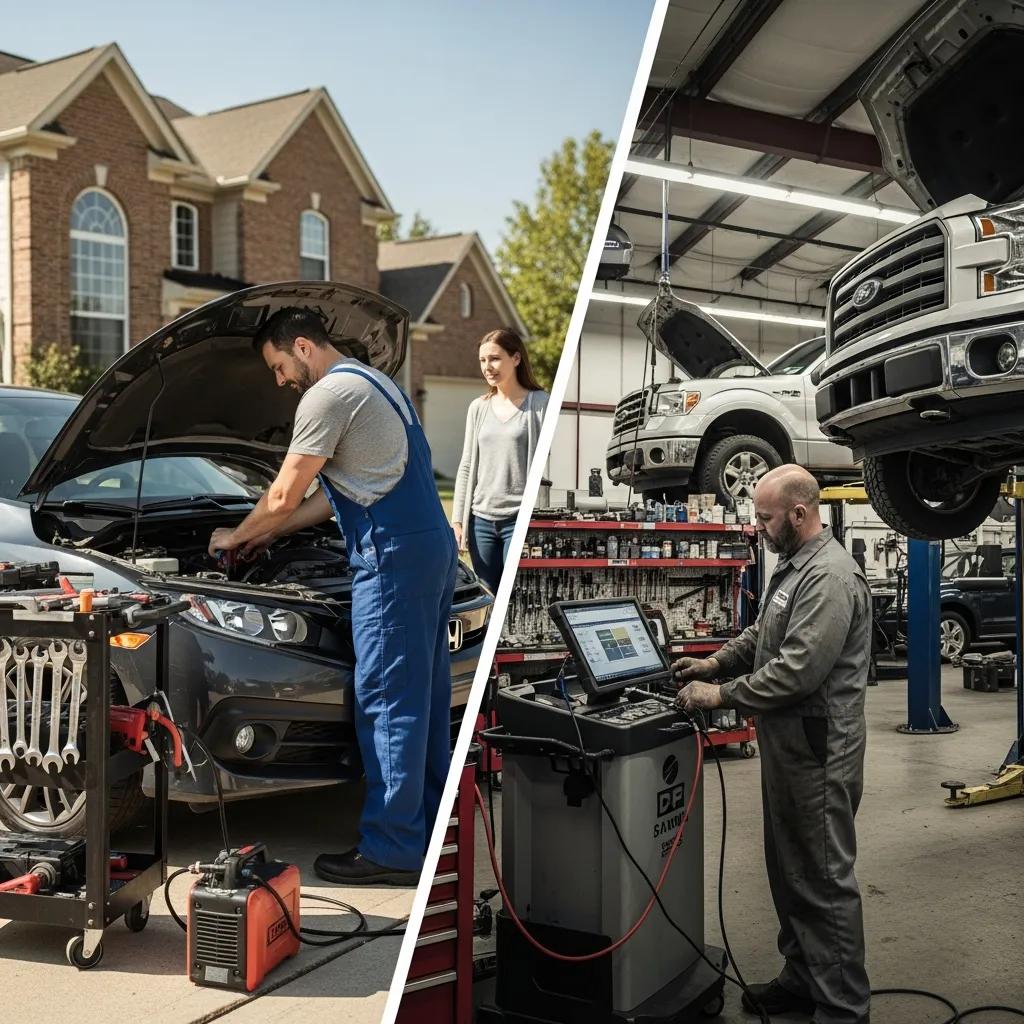
Mobile mechanics offer on-site convenience that often saves towing costs and time, while traditional shops provide equipment, diagnostics, and warranty structures for complex repairs. For minor repairs, mobile services can be cheaper by eliminating towing and offering lower hourly labor for straightforward tasks; however, mobile techs may lack the full diagnostic bays and heavy equipment that shops use for transmissions or major engine work. Evaluate total cost by including parts markup, potential towing, and whether warranty coverage is required for future protection. The table below summarizes the trade-offs for common service types to help you select the most cost-effective route.
How Do Mobile Mechanic Services Save Money on Towing and Convenience Fees?
Mobile mechanics reduce immediate costs by performing many minor services at your location, avoiding tow fees and saving time lost to shop visits. Jobs like battery replacement, starter swaps, brake pad changes, and simple fluid services are often well-suited to mobile technicians and can be competitively priced. Limitations include complex diagnostics, heavy equipment needs, or warranty-backed component replacements that require a shop’s infrastructure. For straightforward repairs, the convenience savings often outweigh the modest premium some mobile services charge, but for anything beyond a basic fix a shop remains the more economical long-term solution.
- Mobile mechanics excel at minor repairs and on-site emergencies, saving towing costs.
- Complex diagnostics and heavy repairs generally exceed mobile service capability.
- Verify whether mobile work includes any short-term guarantees or parts warranties.
Below is a concise comparison of service types, advantages, and typical cost differences.
Why Choose a Full-Service Shop Like 8 Cylinders for Complex Repairs and Warranties?
Full-service shops deliver the diagnostic equipment, staffed technicians, and warranty structures that prevent repeat repairs and protect your investment in complex jobs. 8 Cylinders Auto Repair, located at 1901 W Courtland St, Philadelphia, PA 19140, is a local example of a full-service option that lists engine diagnostics and repair, brake repair, suspension and steering, transmission repair, exhaust system repairs, electrical system diagnostics, radiator and cooling system maintenance, and car inspection and emissions testing among its offerings. The shop emphasizes ASE-certified technicians, modern service bays, honest pricing, and fast turnaround times, and provides warranty-backed work that reduces long-term ownership costs by avoiding repeat fixes. Choosing a certified, well-equipped shop for complex systems often prevents higher expenses from misdiagnosis or incomplete repairs.
- Full-service shops have diagnostic tools and heavy equipment needed for major repairs.
- ASE-certified technicians and warranty-backed work reduce the probability of repeated failures.
- Paying for shop expertise on complex tasks can save money over multiple DIY attempts.
If you face transmission work, complex electrical systems, or repeated engine codes, a full-service shop with transparent pricing and warranties typically delivers the best value and lower lifetime cost.
8 Cylinders Auto Repair is a full-service automotive repair shop at the address above offering the services and attributes listed; when complexity or warranty matters, consider a shop with certified technicians and clear estimates to avoid compounding repair costs. This final note connects the DIY-first strategy with an affordable professional fallback that preserves value and prevents surprises.